

 Whitman Expo







While reviewing the initial results in various categories of recent auctions, my initial take is that the sales were moderate to strong.

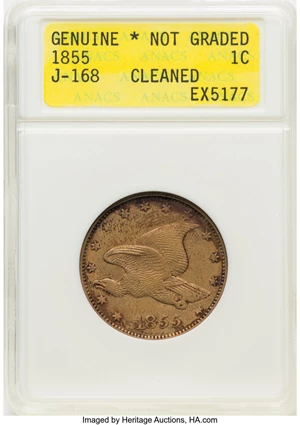
1855 Patterns (1855) Values
Greysheet & Red Book® PRICE GUIDE
The Greysheet Catalog (GSID) of the Patterns (1855) series of Pattern Coinage in the U.S. Coins contains 29 distinct entries with CPG® values between $1,425.00 and $21,000.00.
History and Overview
This year saw continuing experiments for a reduced-diameter copper cent, employing an 1855 dated Flying Eagle obverse similar to that used in 1854 in combination with two different styles of reverse wreath (both of which had been used in 1854). Various alloys including French bronze were tested. Mint records indicated three metal compositions:11 bronze (95% copper, 4% tin, 1% zinc); 90% copper, 10% nickel; and 80% copper, 20% nickel.
At least one half dollar was struck of this date, from regular dies but in aluminum. It is not known whether it is indeed a contemporary (not restrike) impression, or whether it is part of the numerous later aluminum restrikes. (In 1855, aluminum was considered a very expensive metal, hard to obtain and refine.) The only piece traced resides at Princeton University, where it has been since the 1880s.
Collecting Perspective
Numismatic interest for patterns of this year is focused on the Flying Eagle cents, of which most numismatists aspire to have one example, although two different wreath variations and several metal variations can be obtained. The metal variations, delineated below, are virtually impossible to distinguish from each other in the absence of elemental analysis. Again, although originals may have been struck in bronze (as believed by Dr. Judd), it may be that any and all bronze pieces are restrikes.
Our Sponsors








Filter
Year
Series
Patterns (1792)
Patterns (1794)
Patterns (1795)
Patterns (1796)
Patterns (1797)
Patterns (1799)
Patterns (1803)
Patterns (1804)
Patterns (1805)
Patterns (1806)
Patterns (1808)
Patterns (1810)
Patterns (1813)
Patterns (1814)
Patterns (1818)
Patterns (1823)
Patterns (1827)
Patterns (1831)
Patterns (1834)
Patterns (1836)
Patterns (1838)
Patterns (1839)
Patterns (1840)
Patterns (1846)
Patterns (1849)
Patterns (1850)
Patterns (1851)
Patterns (1852)
Patterns (1853)
Patterns (1854)
Patterns (1855)
Patterns (1856)
Patterns (1857)
Patterns (1858)
Patterns (1859)
Patterns (1860)
Patterns (1861)
Patterns (1862)
Patterns (1863)
Patterns (1864)
Patterns (1865)
Patterns (1866)
Patterns (1867)
Patterns (1868)
Patterns (1869)
Patterns (1870)
Patterns (1871)
Patterns (1872)
Patterns (1873)
Patterns (1874)
Patterns (1875)
Patterns (1876)
Patterns (1877)
Patterns (1878)
Patterns (1879)
Patterns (1880)
Patterns (1881)
Patterns (1882)
Patterns (1883)
Patterns (1884)
Patterns (1885)
Patterns (1889)
Patterns (1890)
Patterns (1891)
Patterns (1896)
Patterns (1906)
Patterns (1907)
Patterns (1908)
Patterns (1909)
Patterns (1910)
Patterns (1913)
Patterns (1915)
Patterns (1916)
Patterns (1918)
Patterns (1920)
Patterns (1922)
Patterns (1923)
Patterns (1925)
Patterns (1935)
Patterns (1942)
Patterns (1944)
Patterns (1965)
Patterns (1971)
Patterns (1974)
Patterns (1975)
Patterns (1976)
Patterns (1977)
Patterns (1979)
Patterns (1982)
Patterns (1985)
Patterns (1999)
Patterns (2000)
Die and Hub Trials and Splashers
Sort by
$1,600 - $7,920
$3,400 - $9,600
$6,900 - $10,200
$3,600 - $4,320
$1,425 - $6,480
$3,800 - $7,800
$4,800 - $6,720
$6,500 - $7,800
$3,500 - $21,000
$4,000 - $9,360
Sponsor

No entries match your filters.
Subscribe for complete pricing access
Subscribe to View
Log In
Greysheet News
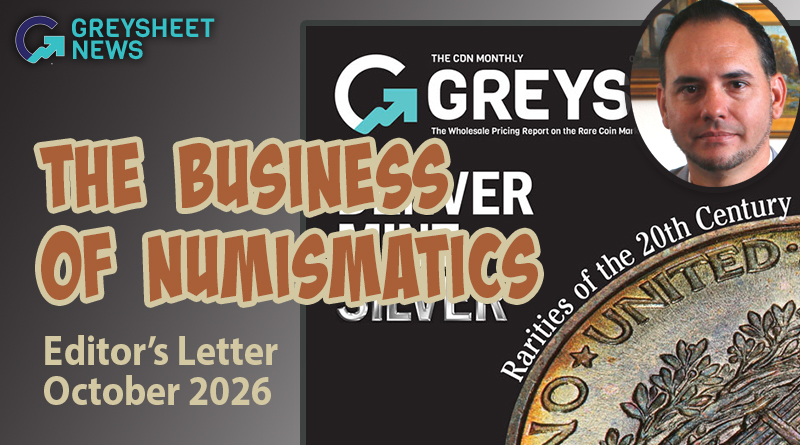
The Business of Numismatics: October 2026 Greysheet Editor's Letter
10/6/2026
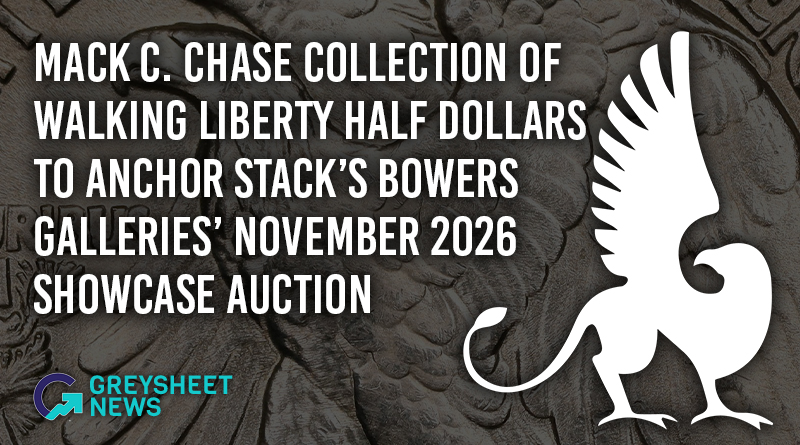
Mack C. Chase Collection of Walking Liberty Half Dollars to Anchor Stack's Bowers Galleries' November 2026 Showcase Auction
More than 300 lots, consisting of high quality Walking Liberty half dollars from the Mack C. Chase Collection are set to cross the auction block as part of Stack's Bowers Galleries' November Showcase Auction, the official auction of the Whitman Expo.
10/6/2026
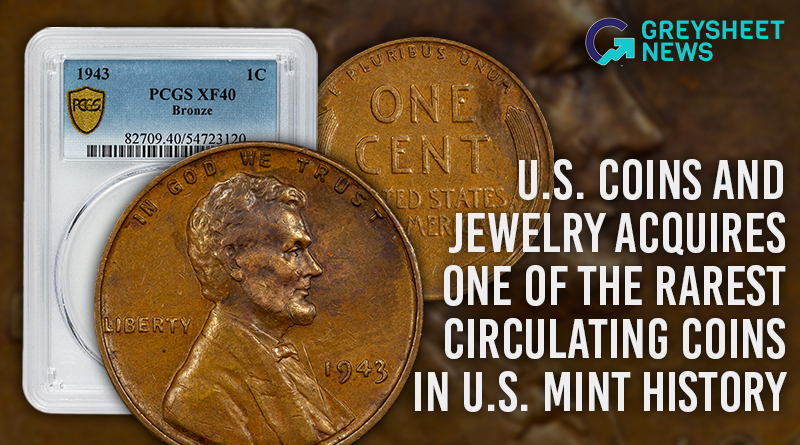
U.S. Coins and Jewelry acquires one of the rarest circulating coins in U.S. Mint history
The 1943 bronze Lincoln cent, graded Extra Fine by PCGS, was acquired from a family that held it unverified since the early 1960s.
10/1/2026
Events
Knoxville Coin and Currency Show - TN
Location: Rothchild Catering & Conference Center
Saturday, August 1, 2026