

 Whitman Expo


Just 137 lots of the Hobo Nickel collection from the Candace D. Kagin realized over $100,000 after strong bidding online during the Kagin's Auction September 28th.

1776 Dollar Denominations
Greensheet & Friedberg® Price Guide
The Greysheet Catalog (GSID) of the 1776 Dollar Denominations series of Georgia Colonial Currency in the U.S. Currency contains 26 distinct entries with CPG® values between $300.00 and $4,000.00.
The order of emission and the amounts of the Georgia dollar denomination issues of 1776 and 1777 are not determinable primarily because (1) the Council of Safety authorized expenditures from time to time without specifying any paper money detail; (2) many official records were burned during the British occupation of Savannah; (3) James Johnston who had been the official colony printer since 1763 remained loyal to England during the American Revolution and his shop, after confiscation, was operated by inexperienced personnel; and (4) the borders, text colors, seals, seal colors, dates, and denominations lack uniformity. The 1776 and 1777 paper currency was printed in different sizes and on sheets containing 4, 8, 9, 10 or 12 certificates. The certificates were generally composed of standard letters and printer’s ornaments, each certificate on a sheet having a different selection and arrangement of ornaments on its borders. Those denominations under $1 were always printed in black. Those of $1 and over usually had the border and some standard text printed in black in such a way that any desired denomination and some additional text could be added in red in a second printing. Sometimes the portion printed in red was arranged so that several of the same denominations were printed on one sheet, resulting in the same denomination of an issue having many different borders. On other occasions, after a needed number of a denomination was completed, only the denomination on some certificates was changed so that several different denominations would contain identical borders. The first portion of the integral denominations of the June 8, 1777 issue had the word “in” printed in black in the sixth line while other words in the line were printed in red, but subsequently for more convenience in printing, all of the sixth line was printed in red. Sometimes minor border variations occur because one or more pieces of ornamental type broke or fell out of the chase in the course of printing and were replaced with ornamental type, which differed from the original or was differently placed. On some sheets including the June 8, 1777 and September 10, 1777 issues the same serial number was written on all certificates. Where more than one of the same denomination was printed on such a sheet this resulted in more than one of the same denomination carrying the same serial number. One of a group of seven circular emblematic seals was assigned to each denomination. These were applied by a separate overprinting on a sheet. A transposition of the seals for the $2 and $4 occurred when the 1776 light blue seal issue was prepared, but the error was noticed and corrected on the balance of the issue. On the 1777 issue the same seals impressed on the lower denominations were reused on the high denominations. Red, orange, green, blue-green, light blue, dark blue, and maroon colors were used in inking seals. When the orange ink supply was used up on one 1776 issue, greenish ink was used on the balance of the issue so otherwise identical bills are found with two seal colors. The June 8, 1777 and Sept. 10, 1777 authorizations have red seals for the four lowest integral denominations and dark blue seals for the four highest ones. Some seals wore out from use and new seals with the same insignia were prepared. Differences between original and substituted seals are readily noticeable. All 1776 issues have only the year as the date except for one issue, which has no date at all. The denominations are quite “odd” and “numerous” in the 1776–1777 period and include $1/10, 1/5, 1/4, 1/3, 2/5, 1/2, 2/3, 3/4, 4/5, 1, 2, 3, 4, 5, 6, 7, 8, 9, 10, 11, 13, 15, 17 and 20, as well as eight denominations in pounds, shillings and pence. The number of signatures on the bills was from two to five, generally the greater number being on the higher denominations. The late Harley L. Freeman is entitled to particular recognition for his pioneering work over many years in the study of the Georgia border varieties and other Georgia numismatic data from which this listing was partly developed.Our Sponsors






Filter
Year
Series
1735-1745 Oglethorpe Bills
1735-50 Sola Bills
Issue of 1755
Issue of May 1, 1760
Issue of 1762
Issue of March 25, 1762
Issue of July 8, 1765
1766-1767 Written Dates
1768-1770 Tax Certificates
1769 Lighthouse Certificates
Issue of 1773
Issue of 1774
Issue of 1775
1776 Sterling Denoms
1776 Fractional
1776 Dollar Denominations
Issue of 1777
Issue of June 8, 1777
Issue of September 10, 1777
Issue of May 4, 1778
Issue of January 9, 1782
Issue of October 16, 1786
Sort by
Sponsor
No entries match your filters.
Subscribe for complete pricing access
Subscribe to View
Log In
Greysheet News
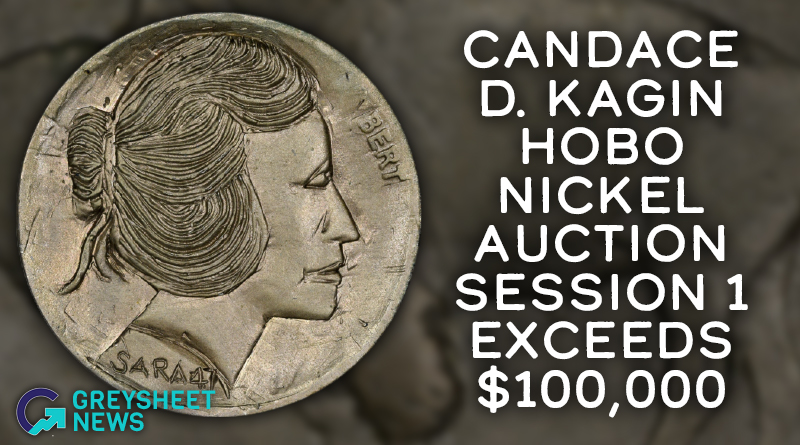
Candace D. Kagin Hobo Nickel Auction Session 1 Exceeds $100,000
10/5/2026
![Greysheet Podcast: eBay Just Changed Coin Collecting! $500+ Coins Get AUTHENTICATED [Video]](https://images.greysheet.com/l/blogs/20261002/4e9a81e9-b3fd-4f0b-930a-f64bfea7a611.jpg)
Greysheet Podcast: eBay Just Changed Coin Collecting! $500+ Coins Get AUTHENTICATED [Video]
Greysheet Podcast featuring John Feigenbaum, Hunter Hicks, and Heather Kline.
10/2/2026
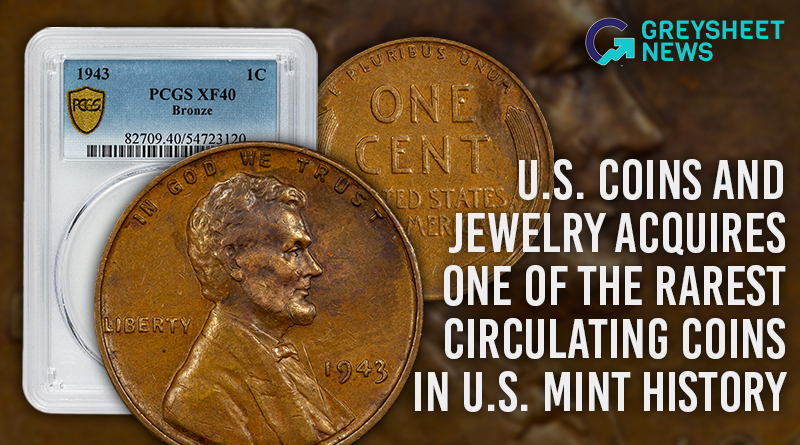
U.S. Coins and Jewelry acquires one of the rarest circulating coins in U.S. Mint history
The 1943 bronze Lincoln cent, graded Extra Fine by PCGS, was acquired from a family that held it unverified since the early 1960s.
10/1/2026
Events
Knoxville Coin and Currency Show - TN
Location: Rothchild Catering & Conference Center
Saturday, August 1, 2026